Zeus Banking Trojan

Malware Analysis Report: zeus.pdf.exe
Zeus Trojan Overview
Background Information
- Purpose: Primarily created to be a financial banking trojan.
- First Spotted: 2007, when Zeus Trojan was caught stealing sensitive information from systems owned by the U.S. Department of Transportation.
- Variants: Over 573 known versions and 36 known families, according to Zeus Museum.
- Code Leak: Malicious code became public in 2011 after a leak.
- Suspected Author: Evgeniy Mikhailovich Bogachev
- Source: Krebs on Security
Delivery Methods
- Drive-by Downloads
- Users visit a compromised website hosting the backdoor trojan.
- Now largely obsolete due to modern browser protections.
- Phishing & Spam Campaigns
- Primary infection method in modern attacks.
- Victims are tricked into downloading and executing malicious attachments or links.
Primary Goals
- Steal financial information from infected systems.
- Exfiltrate sensitive banking data.
- Add infected machines to a botnet, often P2P-based (depends on Zeus family).
Crackdown History
- Gameover Zeus (a major variant) was taken down by the FBI in 2014.
- Impact in the U.S.: Estimated 25% of computers were infected.
- Financial Damages: Over $100 million.
- Evgeniy Bogachev: $3 million bounty by the FBI, still one of the most wanted hackers.
Impact
- Inspired hundreds of additional malware variants using parts of Zeus’s source code.
- Resulted in millions of infected machines.
- Global damages in the hundreds of millions of dollars.
Overview
- File Name:
zeus.pdf.exe - File Type: Windows Executable
- Target OS: Windows
- Time Date Stamp: Mon Nov 25 10:32:03 2013 UTC
- Hashes:
- MD5:
ea039a854d20d7734c5add48f1a51c34 - SHA1:
9615dca4c0e46b8a39de5428af7db060399230b2 - SHA256:
69e966e730557fde8fd84317cdef1ece00a8bb3470c0b58f3231e170168af169
- MD5:
- IMPHASH:
308fe2649c586660c71bc787d65e54fd
VirusTotal Scan Overview
- Detection Rate: 53/76 antivirus engines flagged the file as malicious.
- Primary Threat Label:
trojan.zaccess/sirefef - Threat Categories:
- Trojan: 33 detections
- Dropper: 5 detections
- Common Threat Names:
zaccess: 13 occurrencessirefef: 7 occurrenceswldcr: 5 occurrences
- Notable Detections:
- ALYac:
Trojan.ZeroAccess.RN - Kaspersky:
Backdoor.Win32.ZAccess.evyo - Microsoft:
Backdoor:Win32/ZAccess!MTB - Malwarebytes:
Sirefef.Trojan.Bot.DDS - Symantec:
Trojan.Zeroaccess.C
- ALYac:
basic capa output
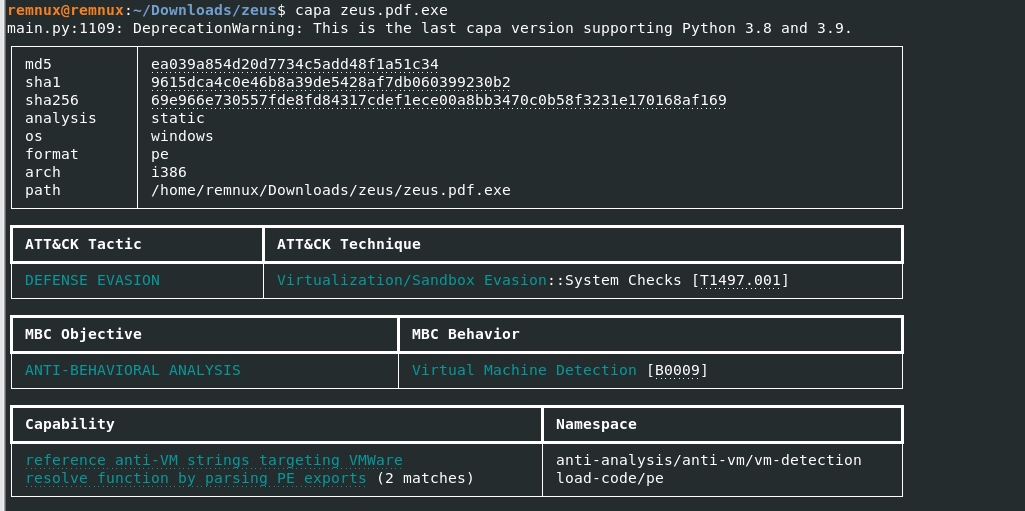
Visual Representation
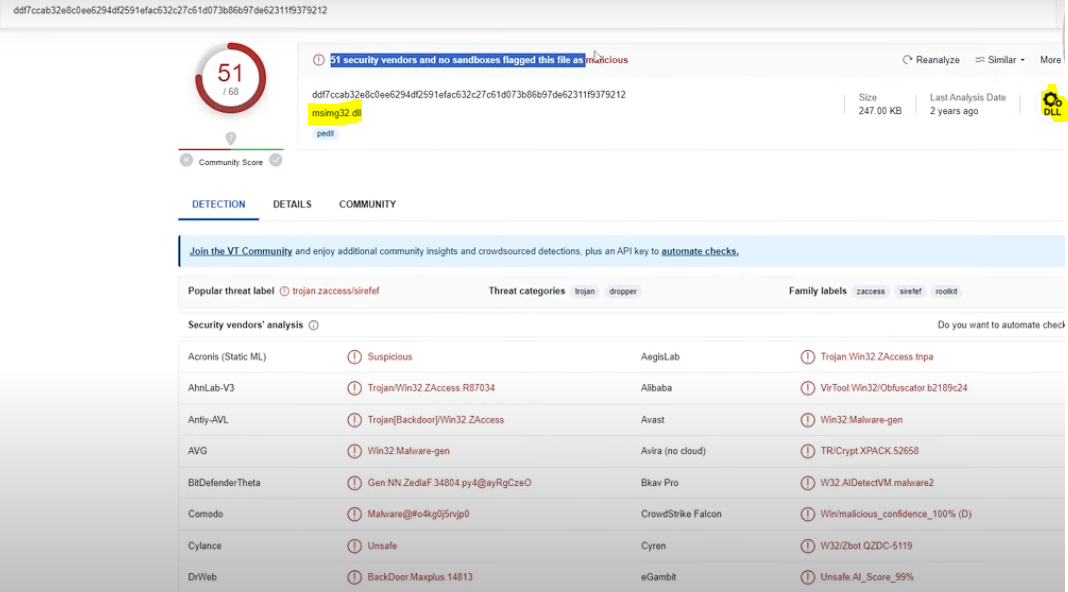
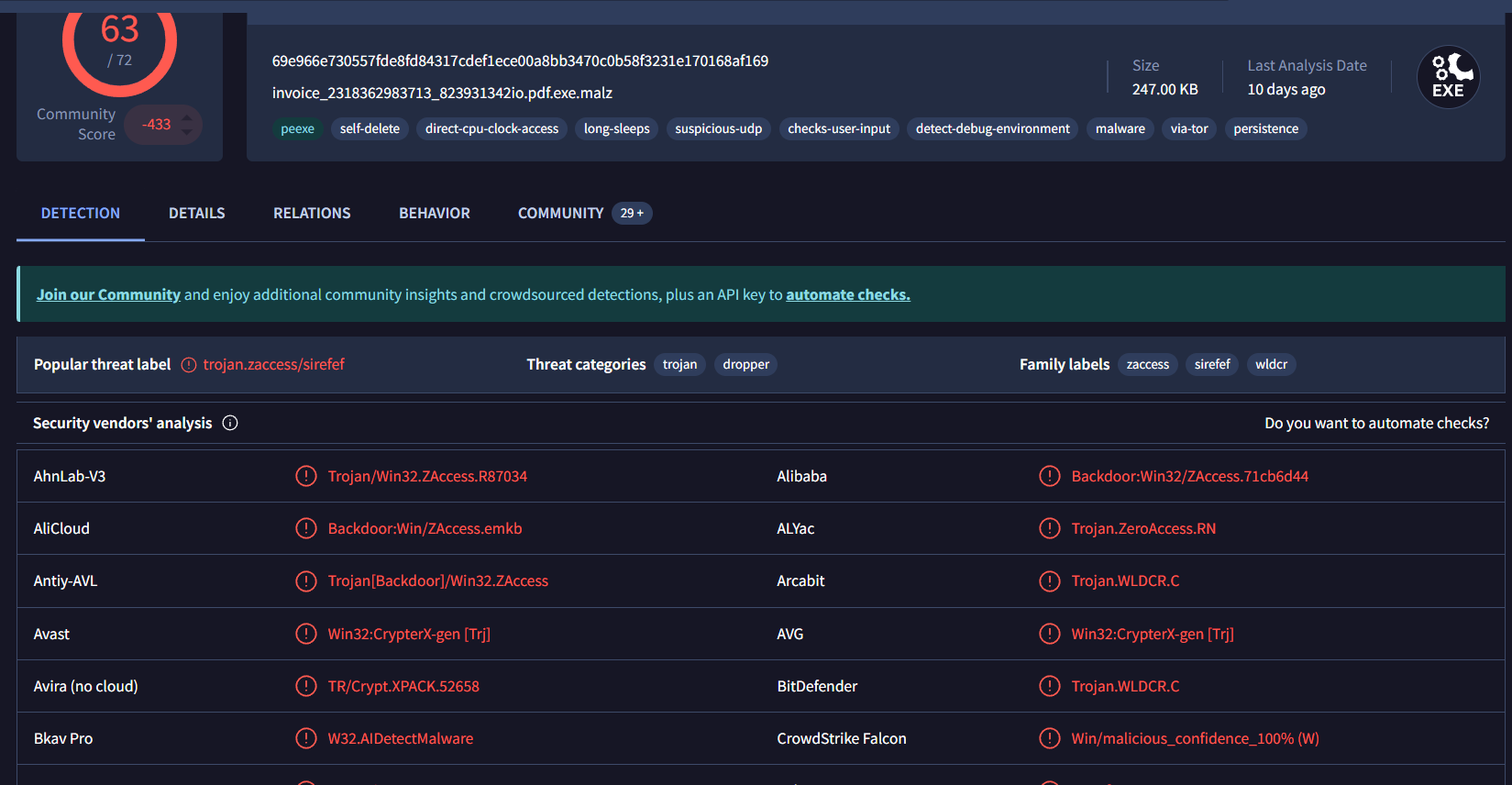 Caption: Screenshot of VirusTotal scan results for zeus.pdf.exe.
CrowdSourced IDS Alerts
- Alerts: 3 high-severity alerts detected
- Target: IP
85.114.12…, Port53(DNS traffic) - Category: Network Trojan activity
- Source: Proofpoint Emerging Threats Open ruleset
- Target: IP
- Alert Summary:
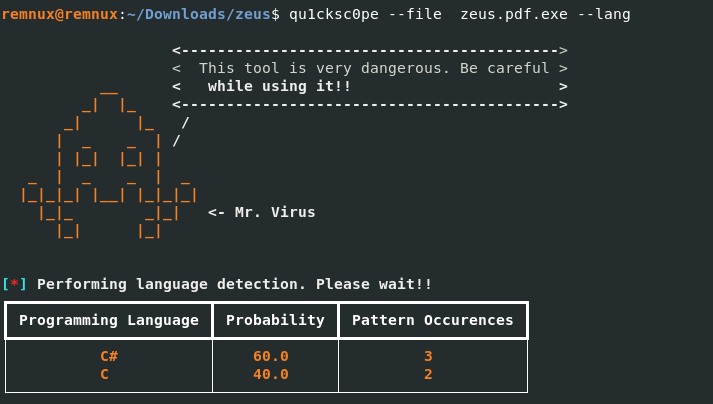
- Probable Languages:
- Embedded PE Files: None detected.
- Registry Keys: No patterns found.
- Special Artifacts: None identified.
- Function Count: 81 functions analyzed, with sizes ranging from 1 to 1060 bytes; notable large functions (
sub_0040142f,sub_00408469) may indicate complex logic.
Windows API Analysis
- Total Imports/Exports Analyzed: 150
- Categorized Behaviors:
- File and Directory Discovery (34 functions):
- Functions like
CreateFile,WriteFile,DeleteFileA,FindFirstFile, andPath*variants indicate extensive file manipulation and directory traversal capabilities.
- Functions like
- Persistence:
- Uses
WinExecandSetCurrentDirectoryfor execution and persistence mechanisms.
- Uses
- Credential Access and Keylogging (5 functions):
GetAsyncKeyState,VkKeyScanA, andGetKeynameTextAsuggest keylogging to capture user input.
- Networking/Web (2 functions):
- Limited to
Ping, indicatng basic network activity.
- Limited to
- Memory Management (17 functions):
LocalAlloc,VirtualQueryEx, andHeapFreeshow memory manipulation.
- Evasion/Bypassing (6 functions):
CreateFileMappingA,GetTickCount, andDeleteFileAhint at anti-analysis techniques.
- Information Gathering (32 functions):
GetClipboardData,GetDriveTypeA, andGetWindowsDirectorysuggest data harvesting.
- Process Management (9 functions):
WinExecandGetCurrentThreadfor process control.
- DLL/Resource Handling (7 functions):
GetModuleHandleWandFreeLibraryfor resource access.
- File and Directory Discovery (34 functions):
- Linked DLLs:
SHLWAPI.dll,KERNEL32.dll,USER32.dll 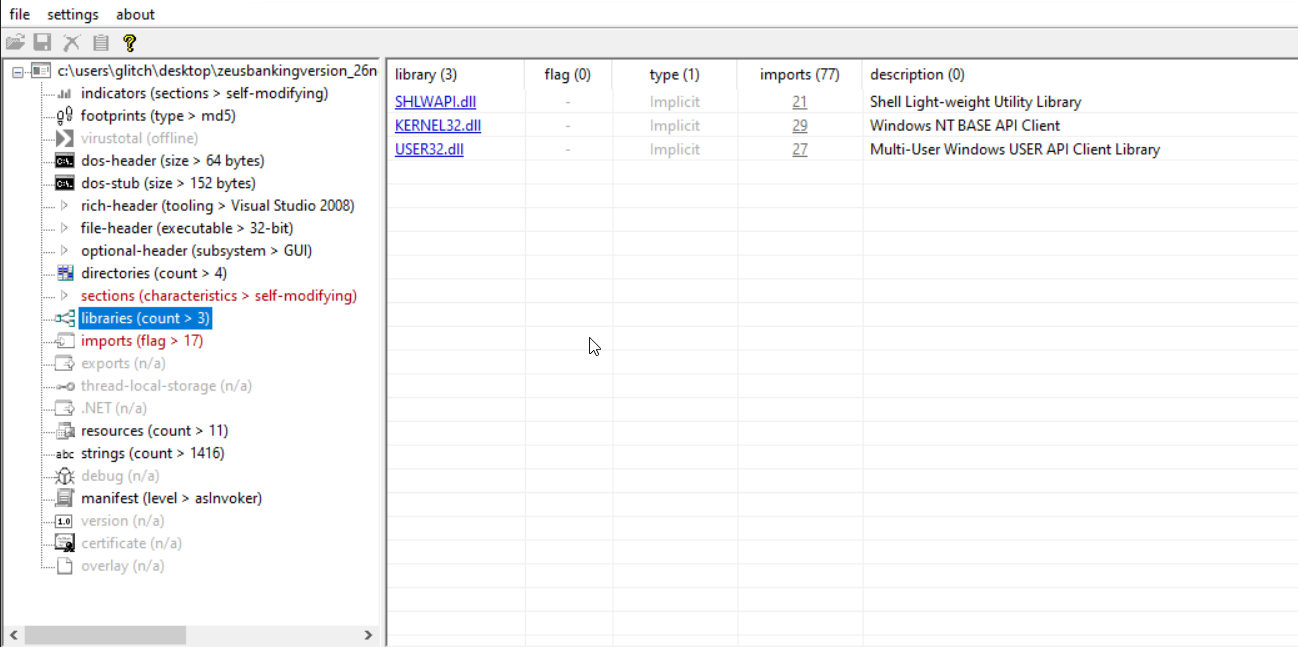
Section Analysis
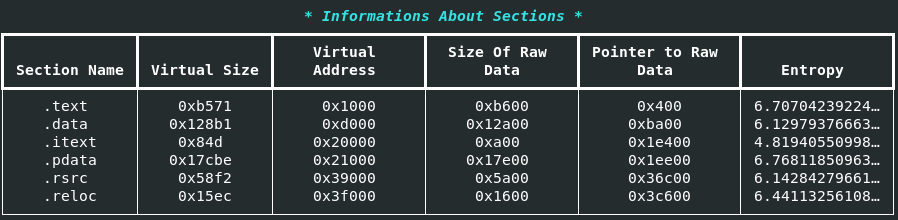
- Sections:
.text: 0xb571 bytes, Entropy: 6.71 (code section).data: 0x128b1 bytes, Entropy: 6.13 (data storage).itext: 0x84d bytes, Entropy: 4.82 (possibly initialization code).pdata: 0x17cbe bytes, Entropy: 6.77 (exception handling).rsrc: 0x58f2 bytes, Entropy: 6.14 (resources).reloc: 0x15ec bytes, Entropy: 6.44 (relocation table)
- Observation: High entropy in
.textand.pdatasuggests packed or obfuscated code.
String Analysis
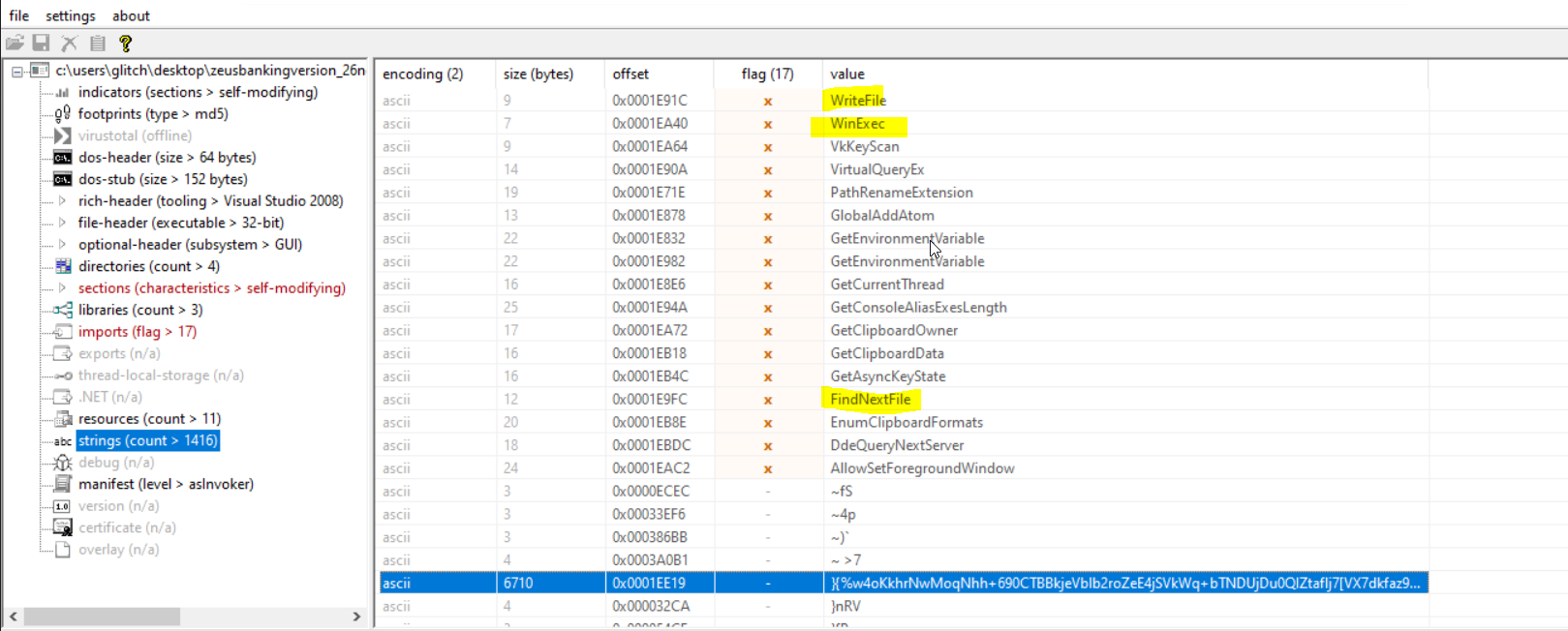
- Stack Strings:
c0lV,O9lp,6zQy,P3RRw,qpju(random, possibly encrypted) - Decoded Strings: Numerous short strings (e.g.,
0BKn,pjAb:$a$,O8Xu), likely obfuscated data or keys. - Interesting Patterns: References to
SHLWAPI.dll,KERNEL32.dll,USER32.dll.
File Header
API calls
AllowSetForegroundWindow: Allows a specified process to set the foreground window even if the process does not currently own the foreground windows focus.
GetCapture
GetWindowTextLength
GetEnvironmentVariable
GetEnvironmentVariable
VkKeyScan: Translates a character to the corresponding virtual-key code
GetAsyncKeyState: Allows you to determine whether a particular key is currently pressed or released
PathRenameExtension
WriteFile
FindNextFile
GetCurrentThread
WinExec: Legacy function used to launch an application or execute a command line. Available in earlier versions of Windows
GlobalAddAtom: Adds a string to the atom table. Atom table are used for storing small pieces of string-based data. Legacy mechanism
GetClipboardOwner
GetClipboardData
EnumClipboardFormats
DdeQueryNextServer
GetConsoleAliasExesLength: Retrieves executable files.
SetCurrentDirectory
Defense Evasion
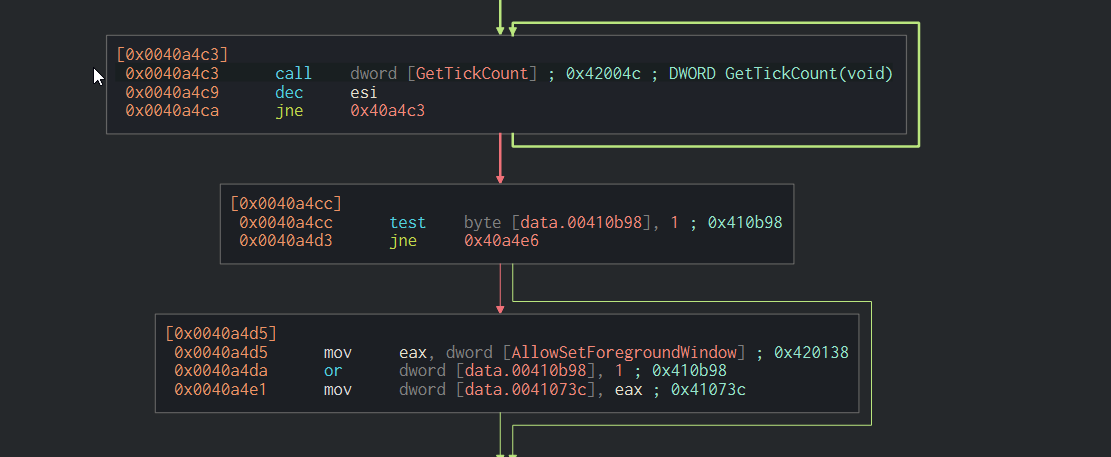
Tests to see how long the Windows machine has been running with the GetTickCount() function. (MITRE ATT&CK sub-technique 3 T1497.003). String Address Location Looking into a set of extracted strings (random gibberish followed by a DLL function):
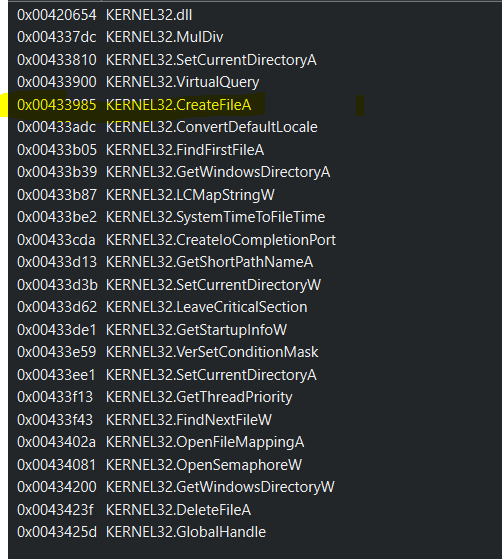
CellrotoCrudUntohighCols KERNEL32.CreateFileA
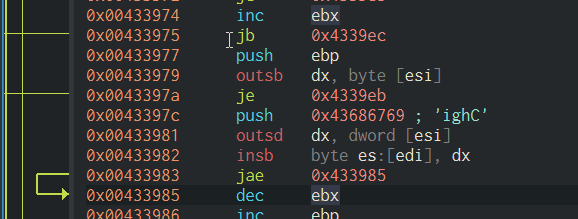
I suspect each of these random blobs of strings is the programs function name for the specific function called within the DLLs function
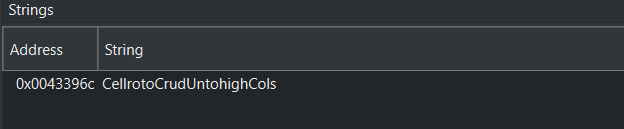
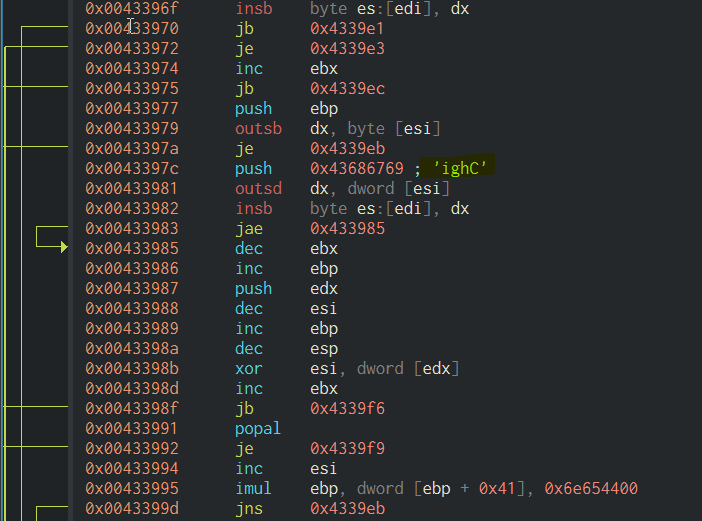
The string icgH has an offset of 19 address space away from the KERNEL32.MulDiv function, meaning they are relatively close
Basic Dynamic Analysis
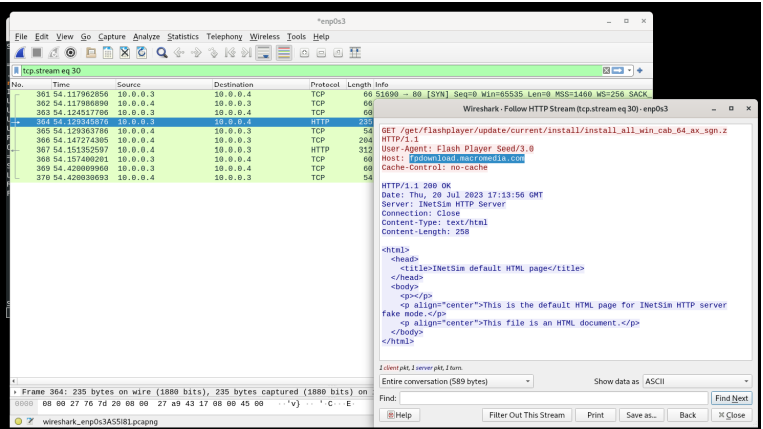
## Host-based Indicators ## Tools Used: Procmon, INetSim, & Wireshark
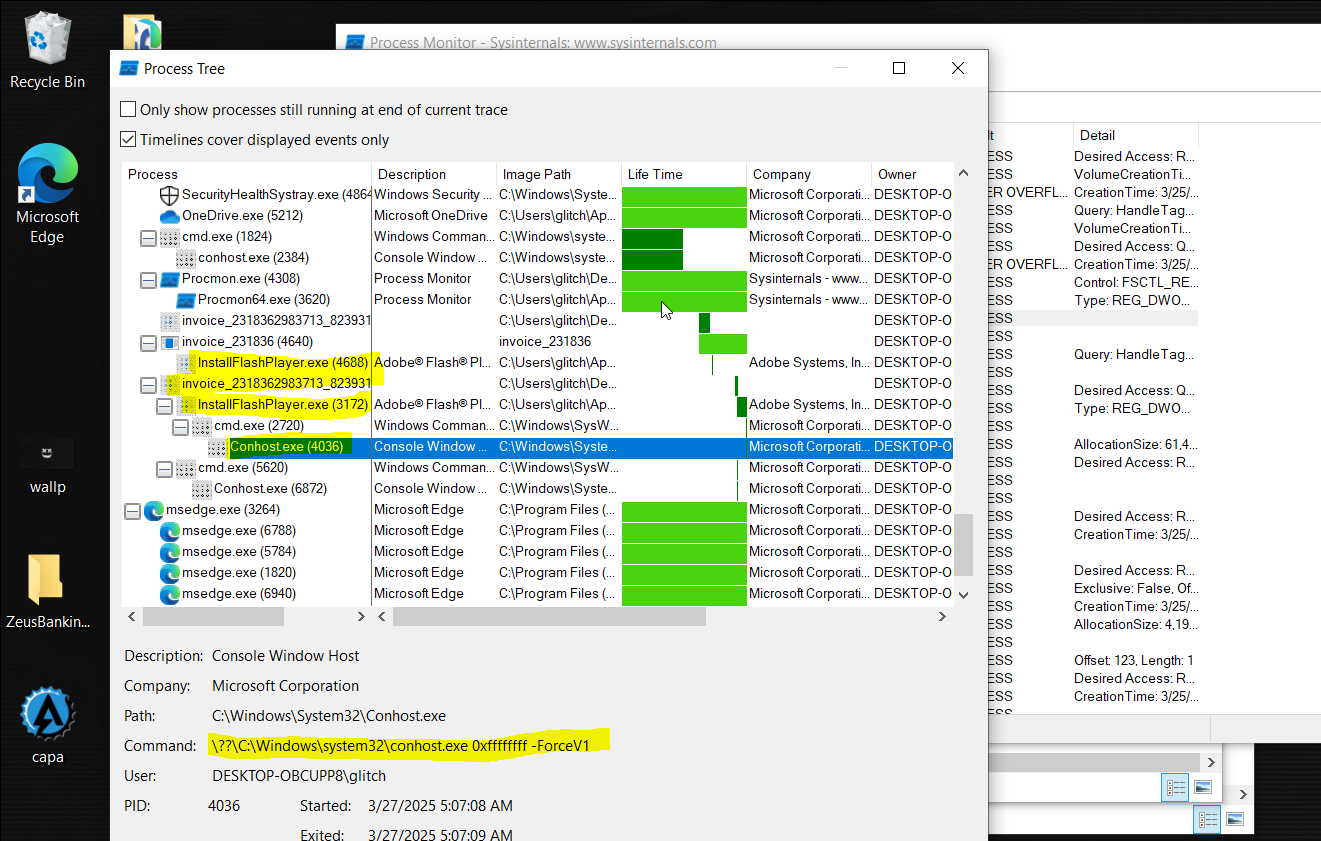
Under invoice parent process has two child processes, including a suspended cmd.exe with a child
conhost.exe
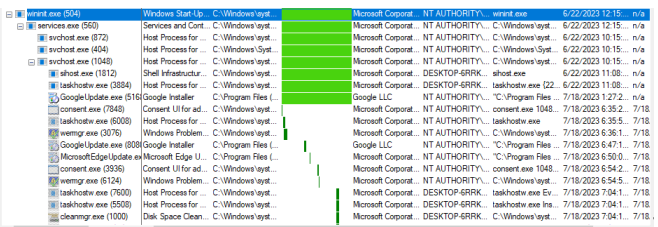
Under wininit.exe -> svchost.exe -> GoogleUpdate.exe is dropped.
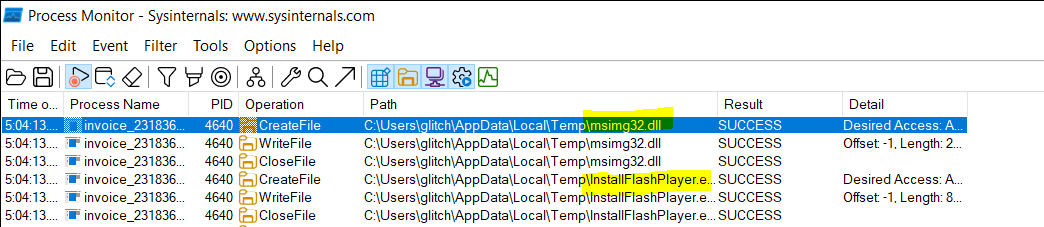
Drops msimg32.dll and InstallFlashPlayer.exe into C:\Users\glitch\AppData\Local\Temp\InstallFlashPlayer.exe.
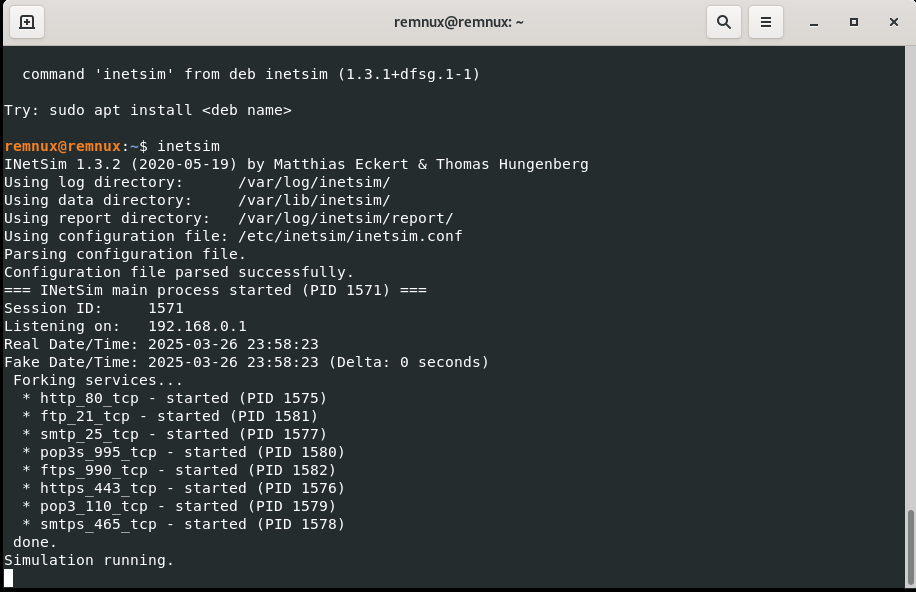
Started inetsim to simulate DNS server and Wireshark for packet capture.
YARA Rule Matches
- Keylogger:
- Matches:
USER32.dll(0x1ec42),GetAsyncKeyState(0x1eb4c)
- Matches:
- Windows File Operations:
- Matches:
KERNEL32.dll(0x1ea54),WriteFile(0x1e91c),DeleteFileA(0x32048),CreateFileA(0x3178e),FindFirstFileA(0x3190e)Detection Rues (YARA)
- Matches:
YARA rule used to detect the Zeus Banking Trojan Version 26-Nov-2013.
1
2
3
4
5
6
7
8
9
10
11
12
13
14
15
16
17
18
19
20
21
22
23
24
25
26
27
28
29
30
31
32
33
34
35
36
37
38
39
40
41
42
43
44
45
46
47
48
49
50
51
52
53

// import pe

rule Zeus {

 meta:

 author="Grant C."

 description="A detection rule against ZuesBankingVersion_26Nov2013"

 strings:

 $file_name="invoice_2318362983713_823931342io.pdf.exe" ascii

 // Suspected name of functions and DLL functionalities.


$function_name_KERNEL32="AsksmaceaglyBubuPulsKaifTeasMistPeelGhisPrimChaoLyr

eroeno" ascii

 $function_name_KERNERL32_CreateFileA="CellrotoCrudUntohighCols"

ascii

 $function_name_KERNEL32_FINDFIRSTFILEA="GeneAilshe" ascii

 // PE Magic Byte.

 $PE_magic_byte="MZ"

 // Hex String Function Name + DLL.

 $hex_string_SHLWAPI_PATHREMOVEFILESPECA= {44 65 6E 79 4C 75 62 65 44

75 6E 73 73 61 77 73 4F 72 65 73 76 61 72 75 74 00 53 48 4C 57 41 50 49}

 condition:

 // Use the pe library to create fine-grained rules for PE files.

 // pe.ispie

 $PE_magic_byte at 0 and $filename

 and $function_name_KERNEL32

 or $function_name_KERNERL32_CreateFileA

 or $function_name_KERNEL32_FINDFIRSTFILEA

 and $hex_string_SHLWAPI_PATHREMOVEFILESPECA
Run the yara64 zeus_rule.yara invoice_2318362983713_823931342io.pdf.exe -s -w -p 32to detect this malware variant based on unique strings.
s: Print matched strings to stdout.
w: Ignore warnings.
p 32: Allocate 32 threads.
Résumé of Key Findings
The file zeus.pdf.exe is a sophisticated Trojan (ZAccess/Sirefef), detected by 53/76 antivirus engines, acting as a backdoor and dropper with aliases zaccess, sirefef, and wldcr. Compiled on November 25, 2013, it targets Windows systems, leveraging 150 imported functions across SHLWAPI.dll, KERNEL32.dll, and USER32.dll. It exhibits extensive file manipulation (34 functions), keylogging (5 functions), and information gathering (32 functions), with minimal networking (Ping). Three high-severity IDS alerts (IP 85.114.12…, port 53) confirm network Trojan activity. YARA rules flag keylogging and file operations, while high-entropy sections (e.g., .text: 6.71) suggest obfuscation. Likely coded in C# (60%) or C (40%), this malware poses a severe threat through persistence, credential theft, and system compromise.